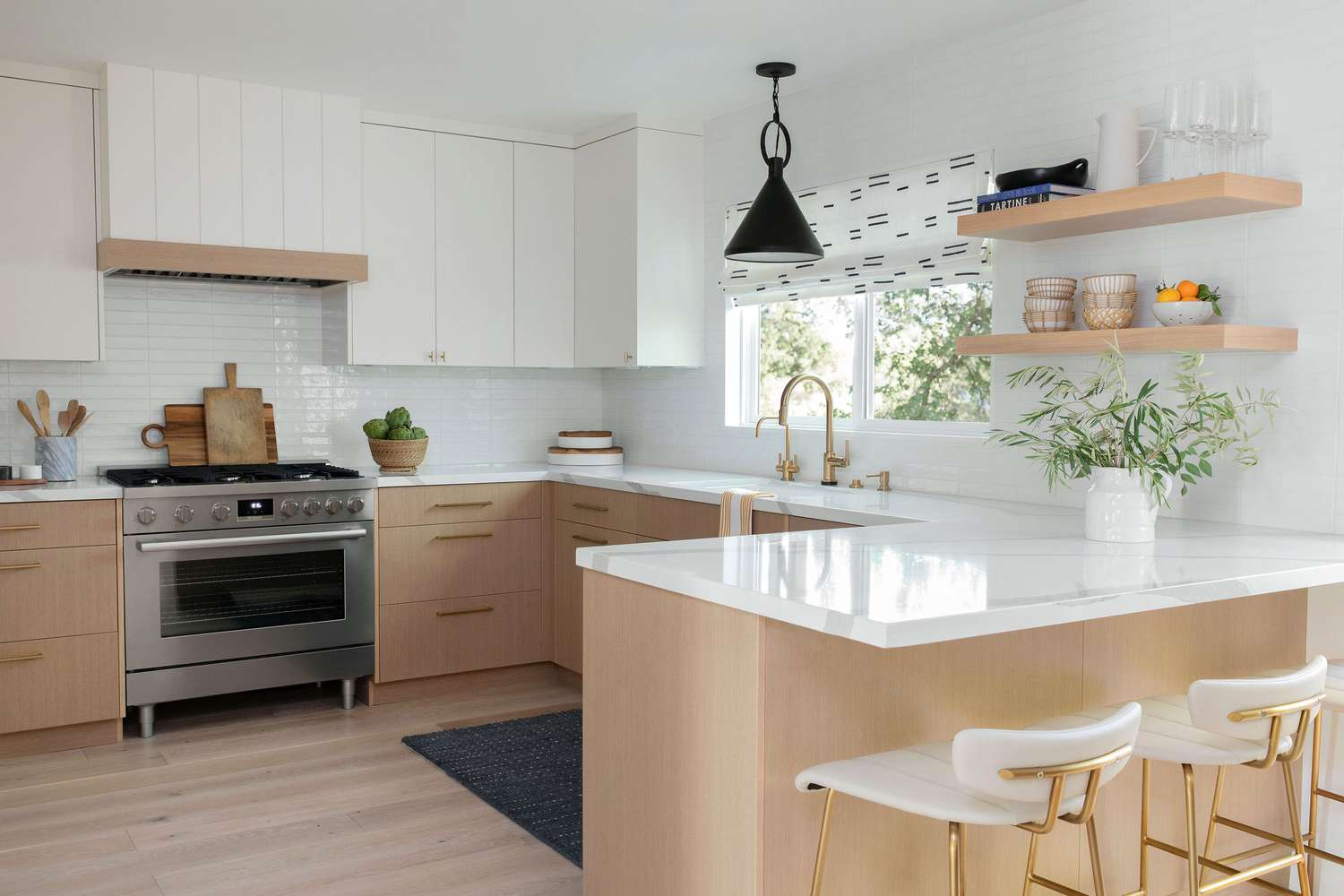
"The kitchen has become the most important room in the house, and the most personal. It's where design has to work the hardest."
Walk into any kitchen designed in the last decade and you'll notice something has shifted. The space that was once hidden away, tucked behind a wall or separated by a swinging door, has become the undisputed heart of the modern home. Open-plan living pushed kitchens to center stage, and designers have responded with spaces that are as considered, as layered, and as beautiful as any formal living room.
But beauty without function is just theater. The kitchens that endure, the ones you keep seeing in magazines years after they were published, manage to balance both. They feel right. And understanding what "right" means is the foundation of any great kitchen design.
Countertops: Earning Their Keep
Countertops are one of the few surfaces in any home that take real, daily abuse: hot pans, acidic foods, knife edges, spilled wine. So material selection isn't just an aesthetic choice; it's a practical one that will define how you experience your kitchen every single day.
Marble, and specifically honed Calacatta or Statuario marble, remains the aspirational choice for those who can accept its demands. It stains. It etches. It requires sealing. And many designers and homeowners love it all the more for it; there's a romance to a surface that records the life lived on top of it. The key is leaning into the natural aging rather than fighting it.
For the uncompromising, engineered stone offers near-identical aesthetics with dramatically less maintenance. Quartzite, a metamorphic rock that's harder and denser than marble, splits the difference: genuinely natural stone with somewhat more forgiving properties. For those who prefer warmth over drama, butcher block brings an irreplaceable organic quality, often used as an accent on islands or prep areas rather than across the full run of counters.
The Coffee Counter: A Daily Ritual
Few small appliances have undergone the aesthetic transformation that espresso machines have over the last decade. What was once an oversized commercial-grade box that designers hid in a butler's pantry is now a deliberate statement piece. Brushed stainless finishes, exposed gauges, and confident proportions have made the machine itself part of the visual identity of a serious kitchen.
The most considered kitchens build a dedicated zone for coffee: a stretch of counter with enough power for a grinder and a machine, generous storage above for cups and beans, and ideally a small prep sink within reach. Done well, it becomes the spot where the day begins. Done casually, it's just a beautiful object that earns its place because you actually use it.
"The best kitchens have a logic to them: a sense that every decision was made deliberately, with the way the space is actually used in mind."
Personality Through Color
The dominant kitchen palette of the last few years has trended quiet: warm whites, soft greiges, muted clay tones. But the most memorable rooms find a place for a single saturated punch of color, and increasingly that color is showing up on small appliances rather than on cabinetry or walls.
The advantage is reversibility. A pastel kettle, a sage espresso machine, or a soft-blue mixer can carry the visual weight of a color story without the commitment of a painted island or a bold cabinet finish. Swap the appliance and the room's mood changes overnight. It's a low-risk way to date your kitchen on purpose, in the best sense of the phrase.
Pastels read warmer than most people expect. Pastel blue against natural wood, against marble, against off-white cabinetry all feel like deliberate choices rather than concessions to a child's bedroom palette. The same logic applies to butter yellow, sage green, and the dusty pinks that keep showing up in the most photographed kitchens of the year.
The All-in-One Era
Counter space is the rarest commodity in any kitchen. So the latest generation of small appliances has been racing to consolidate: an espresso machine that also pulls cold brew and steams milk, a multicooker that takes the place of three single-purpose pots, a smart oven that air-fries and broils and roasts from a single cavity. The argument is appealing in any layout, and unbeatable in smaller kitchens.
The risk of multi-function appliances is the one that's plagued kitchen gadgets for decades: jack of all trades, master of none. The current generation is genuinely better than what came before, but the test is still the same. Does it perform its primary function as well as a dedicated single-purpose tool would? If the answer is yes, the consolidation is real. If the answer is "almost," you've bought a compromise that just looks like a win.
Backsplashes: The Final Brushstroke
A truly finished kitchen lives in its details. The reveal between cabinet doors, precisely aligned. The faucet that feels substantial in the hand. The small pot shelf built into an alcove beside the range. And, more than almost any other surface in the room, the backsplash.
Backsplashes are perhaps the most democratically expressive element in the modern kitchen: the place where personality is permitted even in the most restrained designs. Zellige tile (the hand-made Moroccan ceramic with its characteristic variation and irregular glaze) has become nearly ubiquitous, and for good reason: its imperfections catch light beautifully and age gracefully. Handmade subway tile in softer off-whites serves a similar function at a lower price point. And for those who want to make a statement, a single slab of marble or quartzite running from counter to ceiling behind the range creates something closer to art than architecture.
Peel-and-stick options have also matured significantly. What started as a renter-friendly stopgap has become a genuine design tool: convincing enough at first glance, easy enough to live with, and reversible in a weekend if the mood changes.
Whatever choices you make, the kitchen that will age best is the one that was designed to be used; where the materials were chosen with an understanding of how they'd perform over time, and where the layout reflects the actual rhythm of how you cook, entertain, and live.